Showing posts with label McQuay. Show all posts

Tuesday, 19 February 2019

15 Market Street, Redditch

As part of a visit to the Forge Mill Needle Museum (see Pins and needles), we strolled into the shop which "has guide books and a selection of local history books, cards and souvenirs for you to purchase as a reminder of your visit to the museums."  We were not interested in buying any of the extensive range of needles or a fridge magnet or even a tea towel.

However, as we browsed along the shelves we found a booklet of "Redditch on old picture postcards" by Chris Jackson (1994) and were somewhat shocked by one of the images.  There, in black-and-white, printed large across a double page (pages 12-13), was an image labelled "The Market Place, Redditch, No 949." and "H W Huckfield's Series" ...

In the foreground is a cluster of young children standing in the roadway and staring at the camera.  Behind them is an indifferent horse in harness between the shafts of some out-of-view cart or waggon which we can only see as a shadow on the ground.  In the background, above the doorway of a shop is a large, bold sign declaring:
15 McQUAY 15

Underneath the picture, the accompanying caption text (page 12) says, "Market Place when it had a market. For many year the stalls backed onto the church railings. Hepworth's Corner at the top of Unicorn Hill is in the centre of this postcard in the 'Huckfield' series (no.949) and McQuay's milliners is on the left."

Temporarily distracted from the tough McQuay pin pointers, I set to work investigating the distinctive McQuay milliners.  It seems that John McQuay and his wife Mary Ann, formerly Hollis, whom I have mentioned in previous posts here, had a daughter-in-law who was Mrs McQuay, Milliner in the 1888 Kelly's directory and the 1891 census, then Milliner and Dress Maker in the 1901 census.

In 1964 Redditch was designated a New Town which led to the demolition and redevelopment of many historic streets and buildings.  Many addresses no longer exist, now under the Redditch Ringway or the Kingfisher Shopping Centre.  However, 15 Market Place is still a valid address and if you go there you will find the Redditch Library (see Find the library on a map).  In a sweet twist, people can now access resources to research their namesakes from the precise spot where a McQuay family formerly lived and worked.
Monday, 11 February 2019

Pins and needles

The story so far:
  • In 1848 Joseph McQuay, a Pin Pointer, dies in Redditch.
  • In 1851 Peter McQuay is one of only three Pin Pointers recorded in the census in Redditch.
  • In 1853 John McQuay, a Pin Pointer, marries in Redditch.
 (For details see Occupation Pin Pointer (Tin Painter).)
One key question was whether these three men were working together in a niche role, or were scattered amongst the large workforce in the local area involved with making needles and fish hooks.

Still without any evidence of a relationship between these pin pointers, trying to understand their employment and community, a visit to Redditch, Worcestershire, England seemed sensible.  In particular, we had to visit the Forge Mill Needle Museum which "tells the fascinating and sometimes gruesome story of needle making in Victorian times".

The museum's information says that in 1851 the work was 11 hours per day with breaks for meals, six days a week with 10 full days and 7 half days holiday per year.  The production process was split into many stages and the workers were very specialised, each focused on doing one particular task in the sequence.  This correlated with the very specific occupations listed throughout the 1851 census for Redditch.

We discovered that pointing was the most dangerous and best paid job in needle manufacture.  It involved sharpening the metal points using rapidly spinning grinding stones.  (See for example "History and description of needle making"  Morrall, Michael T. 1862.)  We came home with a copy of "Pointing Woman" by Sara Fraser (1988), a fictional novel about a character who "takes well-paid work as a 'pointer' grinding needles".

Over the years, my research has covered a range of places, people, occupations and events.  I am always looking in the general information for specific details relevant to the journeys and lives of these McQuay pin pointer families.  I am still looking for long-awaited answers to questions such as:
    • What brought them from Dublin in Ireland to Redditch in England?  And in the case of Peter, at least, via the Stroud area in England?
    • Were they pin pointers before they relocated?  What records are there of pin pointing in Ireland?

    Thursday, 7 February 2019

    Reading the Redditch 1851 census

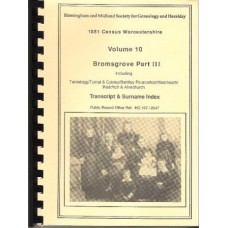
    In the early days of trying to uncover more about my ancestors I found that Peter McQuay (Maquay) was a Pin Pointer in the 1851 census in Redditch, Worcestershire, England.  I was delighted to be able to buy a printed transcript and surname index for the area.  Produced by the Birmingham and Midland Society for Genealogy and Heraldry (BMSGH, now called Midland Ancestors), as I write there are still copies available in their online shop (Bromsgrove Part 3 - 1851 census Surname index Volume 10, BMSGH Product Code: B007, Public Record Office Reference: HO 107/2047).


    As part of my research I eagerly reviewed the whole 200+ pages of the comb bound book.  From reading through all the names, occupations and places of birth I was able to find the following people in the census (spelling and case as in the transcript, place Redditch unless otherwise written with the page number, context and information from other sources added in italics):
    • People with the name McQuay, and those related to them, living in Redditch in 1851:
      • MAQUAY, Peter age 30 Pin Pointer born IRL Dublin (see Occupation Pin Pointer (Tin Painter)), Charlotte age 31 (see The age of the census), Eugene son age 5 and Charles son age 1 month (p482, Britten Street, schedule number 28)
      • HOLLIS, Mary A age 23 Lodger Unmarried, with James son age 8 months (p595, Red Lion Street) - baby James died about six months later in October 1851; two years after that, in December 1853, Mary Ann married John McQuay (vicar and witnesses listed below)
      • MUNSLOW, Timothy age 72 Blacksmith and Elizabeth age 83 with grandchildren HOLLIS Joseph age 6 and Elizabeth age 2 (p498, Evesham Street) - young Joseph and Elizabeth were children of Mary Ann Hollis (see above) and actually the great-grandchildren of Timothy and Elizabeth Munslow
    • People named on civil registration records as registrar, informant, vicar or witness:
      • OSBORNE, John - Banker's agent and Registrar of Births & Deaths (p563) - wrote and signed civil registrations in 1848 and 1852 (McQuay), 1859 (MacQuay), 1860 (Macquay)
      • WATERSON, Henry and Maria (p481, Britten Street) - informants named on one death death certificate each in 1848 (see Same surname, same job, same village)
      • COX, Elizabeth (p486, Windsor Street) - informant named on McQuay death registrations in 1859 and 1860
      • MacKARNESS, John Fielder - Vicar of Tardebigg (Tutnal & Cobley, p441) - marriage of John McQuay (Maquay) and Mary Ann Hollis in 1853
      • WHITTINGTON, Thomas (p482, Britten Street, schedule number 030) - marriage witness
      • SHRIMPTON, Emma (p524) - marriage witness
    The total number of people recorded in the 1851 census in Redditch is over 4,500.  Of those, 40 were identified as being born in Ireland, but none of them were involved in the same industry as my ancestor Peter.  Altogether I have counted 45 Needle Pointers and 35 Needle Manufacturers in Redditch at that time, but there were only 3 Pin Pointers (including Peter, see above) and 1 person specifically who was a Pin manufacturer.
    • ROBERTS, Richard, age 25, Pin pointer, born Warmington, Warwickshire (p529)
    • JONES, William Henry, age 36, Pin pointer, born Birmingham, Warwickshire (p536)
    • HOLYOAKE, Thomas, age 54, Needle & pin manufacturer, born Redditch Worcestershire (p544)
    Of course, a computer search of the 1851 census of Redditch could take you straight to names of interest.  However, that would miss the joy of discovering unrelated people such as Godfrey Rock, Clock Maker born in Hamburg Germany (p598) and Ann Wyers, Tripe Maker (p555).  Thank you to Mrs A.F. Friend for the transcription, indexing and computer processing which led to the production of a book of such delights.

    Sunday, 3 February 2019

    Occupation Pin Pointer (Tin Painter)

    A person's occupation can be both interesting and useful to a family historian.  A few weeks ago in Same surname, same job, same village I wrote about Peter McQuay and Joseph McQuay.  Altogether I have found five McQuay men living around the same time and all recorded as Pin Pointer (or "Tin Painter" in one transcription error!): Henry, John and his father also called John, Joseph and Peter. A summary table is below:

    Date Location Event Person His occupation His place of birth
    1844 Jan 13 Warrington, St Paul (1) Marriage Henry's daughter Catherine [Census: born Ireland, Dublin] Pin Pointer
    1847 Apr 8 Stroud, Peaked Elm (2) Birth Peter's son Charles Pin-Pointer
    1848 Dec 8 Redditch (3) Death Joseph age 26 Pin Pointer
    1848 Dec 18 Redditch (3) Death Peter's son Charles age 1 year and 8 months Pin Pointer
    1850 Dec 8 Redditch (3) Birth Peter's son Charles Pin-maker
    1851 Mar 30 Redditch, Britten Street (3) Census Peter age 30 Pin Pointer Ireland, Dublin
    1852 Jul 16 Redditch (3) Birth Peter's son Joseph Pin maker
    1853 Dec 27 Redditch, St Bartholomew (3) Marriage John and John's father Pinpointer
    1856 Apr 12 Aston, Pritchet Street (4) Birth Peter's son Frederick Journeyman Pinmaker
    1859 Dec 21 Redditch (3) Death John's daughter Alice age 16 months Pin maker
    1860 Feb 1 Redditch (3) Death John's son John Bernard age 4 years Pinpointer
    1861 Apr 7 Redditch, Windsor Street (3) Census John age 32 Machinist Ireland
    1861 Apr 7 Aston, Pritchett Street (4) Census Peter age 38 Pin Pointer Ireland
    1864 Jul 27 Birmingham, Ormond Street (5) Birth Peter's son Albert Wire Drawer Journeyman
    1871 Apr 2 Redditch, Unicorn Hill (3) Census John age 39 Pin Machinist Ireland, Dublin
    1871 Apr 2 Birmingham, Sherbourne Street (6) Census Peter age 51 Fender Maker Ireland
    1877 Jul 25 Aston, Saltley Street (7) Death Peter age 56 Machinist
    1. County of Lancaster, District of Warrington
    2. County of Gloucester, District of Stroud, Sub-district of Rodborough, Kingstanley (King's Stanley)
    3. County of Worcester, District of Bromsgrove, Sub-district of Tardebigg (Tardebigge)
    4. County of Warwick, District of Aston, Sub-district of Duddeston
    5. County of Warwick, District of Birmingham, Sub-district of St George
    6. County of Warwick, District of Birmingham, Sub-district of Ladywood
    7. County of Warwick, District of Aston, Sub-district of Deritend

    Wednesday, 30 January 2019

    Fatal decisions - by captain, by crew

    Captain Peter McQuay (also M'Quay, McQuie, M'Quie) sailed a ship called the "Thomas", registered in Liverpool, England.  He was originally from Minnigaff, in the County of Galloway, Scotland, married Elizabeth Robinson in Liverpool in 1787 and they had a son there called Peter baptised in March 1793.  Four years later, The Marine List printed a brief sentence of news "The Thomas, M’Quie, from Africa to the West Indies, is cut off on the Middle Passage." (Lloyd's List, No. 2975, Friday 15 December 1797.)

    There are many related reports, from personal diaries to modern academic texts.  One writer quotes the actual words of Captain Peter giving a detailed description of a battle between his ship and a French Republic corvette early in 1797, saying, "M’Quie noted sorrowfully, 'What must my feelings be when I inform you that my surgeon, Mr James Beatty, was shot through the head and died instantaneously at my feet on the quarter deck.'"  Another document comments on more personal attributes saying that the ship belonged to Mr Thomas Clarke and was "commanded by a very brave, respectable, and intelligent man, Captain Peter M’Quie".

    The day that the Captain died was 2 September 1797.  The ship was only a few days away from its destination and the crew were busy having breakfast.  The armourer who was in charge of the weapons had left the secure chest unlocked.  Some watchful women slaves noticed and smuggled the arms down to the captive men slaves below decks who freed themselves, launched a surprise attack, overpowered the crew during the ensuing fight, killed the Captain and took control of the ship.

    There was a range of outcomes for the crew.  Firstly, many were killed that morning in the conflict, butchered afterwards, or forced overboard.  Twelve men escaped in the ship's stern boat.  Nine sailors evaded death because the Africans wanted their sailing expertise to turn the ship around and take them all home.  Four of those subsequently escaped in the ship's longboat, leaving just five crew on board the "Thomas".  After a strange turn of events the Africans also took possession of an American ship, got drunk and confused from consuming its cargo of rum, then were abandoned by the remaining crew of the "Thomas" who sailed away to safety on the American ship.

    So what about the two small boats that had escaped from the "Thomas":  The four men in the longboat reached land, although they were barely alive after six days without food or water.  In contrast, the stern boat was at sea for five-and-a-half weeks and only two of the twelve men survived.  One description alluded to "the most dreadful hardships" whilst another blamed "exposure and lack of provisions".  However, a letter to the Times newspaper quotes a naval chronicle for the year 1807 and says that the men were involved in a gruesome process of drawing lots, slaughter and cannibalism for survival. ("Points from Letters" Times, 26 January 1938, page 8. The Times Digital Archive, http://tinyurl.galegroup.com/tinyurl/8t5fZ4.)

    That sounds very dramatic, tragic and shocking although the concept was familiar from poem and film plots.  What was actually a greater surprise to me was a report that Captain Peter "who had been more than once attacked in the course of former voyages, had, as he thought for the better protection of the ship, during the voyage trained his male slaves to the use of arms, so that if the Thomas should be attacked they might help him at least repel boarders."  ("The Slave Trade - Middle Passage" Chapter 14 in Lang, J., "The Land of the Golden Trade [West Africa]" 1910.)  He had seen an opportunity but misjudged the threats, or mismanaged the risks, and paid with his life.

    Monday, 14 January 2019

    The age of the census

    Have you ever lied about your age?  Have you ever had to think carefully and check your current age before quoting it?  Or have you ever simply made a mistake when writing your age or date or birth?  Sometimes one just wants to give an imprecise answer - "21 again!"

    My great-great-great-grandmother Charlotte Stockwell seems to have given imprecise answers.  There is record of her baptism on 11 July 1819.  Subsequently,
    • 1841 census - age 19  -  actually age 21 - living with her parents.
    • 1851 census - age 31  -  right, for once - living with 30 year old Peter and 2 young sons.
    • 1861 census - age 30  -  11 years missing - living with 38 year old Peter and 3 sons.
    • 1871 census - age 49  -  nearly caught up, just 2 years missing - living with 51 year old Peter.
    • 1881 census - age 58  -  only 9 years more than last census - widow living in the household of her son Robert who had lost his wife and had 3 children to care for, as mentioned in Vital events.
    • 1891 census - age 72  -  a rare overestimate, although only by 1 year - head of her household with a boarder, a 54 year old single man.
    • 1901 census - age 72  -  same age as the previous census, and the same lodger.
    • 1908 death - age 79  -  actually the ripe old age of 89 - her son Robert was the informant for the registration.
    From those records, the estimated year of birth would be a range between about 1818-1831.  Meanwhile, her surname starts out as Stockwell but in later years appears in the census records and variety of transcripts as: Maquay, Magnay, Magway; Quay; Macquay, Marguay, MacGuay; Mc Quay, Mcquay and McQuay.   That seems like a lot for one person, although it is a subset of all McQuay name variants.

    So, this short summary represents a long journey, over many years, a triumph over diversity of counting and spelling.  To finally have the up-to-date set of census records for this great-great-great-grandmother seems like a significant achievement.

    Each ancestor's recorded age, references to date of birth, surname, relations and location are all key to my family history hobby.  However, in their day they probably never imaged that records about them would be cross-checked and analysed by a clerk with a computing machine.  In my day I can only glimpse concerns that Charlotte faced that were far greater than getting her age recorded accurately on successive census records.

    Wednesday, 2 January 2019

    Same surname, same job, same village

    Charles was born at Peaked Elm, Kingstanley on the Eighth of April 1847, the son of Peter Mackway, so it was recorded, whose occupation was Pin Pointer.  The birth registration was in the district of Stroud, sub-district of Rodborough in the County of Gloucester, by John Stephens, Registrar.  The mother was named as Charlotte Mackway, formerly Stockwell.

    Charles McQuay died age 1 year and 8 months, on the Eighteenth of December 1848, of "inflammation in the bowels".  This sad event happened in the hamlet of Redditch, and was registered in the district of Bromsgrove, sub-district of Tardebigg in the Counties of Worcester and Warwick, by John Osborne, Registrar.  The space on the certificate labelled Occupation says, "Son of Peter McQuay (deceased) Pin Pointer".

    Whilst this Registrar had got the spelling of the surname correct, the record that the child's father was deceased was incorrect!  Charles' parents, Peter and Charlotte, went on to have further children and in fact did not die until 1877 and 1908 respectively.

    The informant who registered the death of young Charles was Henry Waterson, who had been in attendance and lived in Redditch.  We will probably never know whether it was this Informant, or the Registrar, who was the source of the misinformation.

    What we do know is that ten days earlier, on the Eighth of December 1848, a 26 year old Pin Pointer with the surname McQuay had indeed died in Redditch.  The Informant, who gave the cause of death as consumption, was named as Mary Waterson.  She is recorded has having been in attendance at the death.  The 1851 census shows Henry and Maria Waterson as husband and wife living a few doors away from the surviving Peter and his family.  The Registrar who recorded the death was John Osborne.

    The man who had died was named Joseph McQuay.  Three and a half years later a new son of Peter McQuay (Pin Maker) and Charlotte is registered with the name Joseph, on Sixteenth of July 1852, by John Osborne, Registrar.  Did Joseph and Peter, with the same surname, same job, living in the same village, know each other?  Did Peter name his new baby after the Joseph who had died?  Were they related?  Also, exactly when and why did Peter and his family move the 50 miles from King's Stanley to Redditch?

    Saturday, 29 December 2018

    Family multiplication

    My grandfather McQuay grew up as one of six sons, although there was another who sadly died aged 12 days.  My great-grandfather was also one of six children, exceptionally in that family there was one girl amongst the boys.  Another generation back and there were six sons there too, as far as I can tell.

    A question which has stared at me ever since I can remember is: How many descendants are there in my generation who carry on the name?  Or as the years have passed: How many descendants are there in the next generation who have the surname McQuay?

    If each of my great-great-great-grandfather's six sons had six sons of their own and so on then I think the answer would be 46,656 descendants in the latest generation.  That's rather a large and unrealistic number!

    We know that over the years there were deaths in infancy, some who reached adulthood but died without marrying, or who did have a spouse but no children, including those who died in wartime.  Not forgetting the obvious situation in which a daughter may become a wife and pass on their own genes but their husband's surname.  Also possible are remarriages after bereavement which create step-families and adoptions, so there can be informal or formal name changes, for this or other reasons. 

    The only way to arrive at an answer to my question would involve tracing every child in every family then counting up the names in the youngest generation.  Well there's a challenge!  At the time of writing I've filled up as many branches as I can, although there are a few apparent dead-ends which may yet yield.  Right now, in the youngest generation in my tree, the number of descendants who have the surname McQuay is 12, yes twelve!

    I am interested in tracing modern day distant relatives for many reasons, not just idle curiosity.  I live in hope that someone I discover now could have stories, photos, certificates, etc which have been handed down to them and could shed more light on our shared heritage.  That may just as easily be a descendant who has a different surname so all of the branches are equally important.  And maybe there will be enough mutual interest to call for a Meet Your Cousin reunion party!

    Friday, 21 December 2018

    McQuay name variants

    The vast majority of records relating to my ancestors have the same spelling of the surname as I have inherited: M, c, capital Q, u, a, y.  When handwritten, the letter 'c' was traditionally raised up to the top of the capital 'M' and the cursive script produced a curly letter 'Q' - features which are unfamiliar in most modern fonts and documents of the digital age.


    As we have seen from some of the records relating to my own great-grandfather, there have been instances of Maquay being written with a letter 'a' instead of a the letter 'c'.  I have also seen lower case letter 'q' and not surprisingly 'Mac' with an extra letter 'a' in the middle of the 'Mc'.

    I remember being shocked to discover that some computer search tools did not match "McQuay" and "Mc Quay".  To get comprehensive results it was necessary to do additional searches with the "Mc" syllable as a separate word, then the same again with "Mac".  Even now some databases have "Quay" as the surname and "Mc" as a middle name or as a two word surname that does not appear in search results for "McQuay".

    When someone has read an original document and transcribed (copied) the surname they may have introduced a variation which is really an error.  This can be because the original ink is very faint, or the handwriting is unclear.
    • Typically the letter 'c' and a round, single-storey letter 'a' can be misread for one another, or can be copied out as 'o', 'e' or even 'r'.
    • Depending on the presence, or absence, and shape of a flourish below the line, the letters 'q ' or 'y ' can be mistaken for an opentail 'g'.
    • If there is more of a flourish than usual at the start of the letter 'u' then it may be transcribed as 'w' or confused with a cursive 'n'.
    • Or a gesture at the end of the name can be mistaken for an extra letter, such as an 'e'.
    Sometimes a variation is rare and easy to spot as one-off error.  It can be the case that a particular spelling appears in multiple records for a period of time but is in the minority compared to all the other places in which a person's name is recorded as expected.  I have also seen the surname written out somewhat phonetically, as it sounds: Mackway or McWhae.  If the name recorded corresponds to a real, more common surname then it is tricky to determine with confidence whether a particular record is related or unrelated.

    The list below shows a range of the surname variations found on McQuay related records, transcriptions and indexes, so far:

    McQuay Mcquay MacQuay Macquay Mc Quay Mc quay Mac Quay Mac quay

    Maquay

    McQueay MacQueay McQucay MacQucay
    McQuaye MacQuaye
    McQuary
    McQua

    MacGuay
    Mcouay Macouay
    Mcquag Maquag
    Mequay
    Meguay
    Megnay
    Marguay
    Maguay
    Magway
    Magnay
    Maqusy

    McKway Mackway
    McWhae MacWhae McWhac MacWhac McWhar
    McWha MacWha
    McWade MacWade

    Quay

    Stockwell (adoption)
    Noblett (adoption)
    Haigh (middle name and alternative surname)

    Monday, 17 December 2018

    Occupation across four generations

    So far we have seen my great-grandfather referred to on official records as Albert Maquay, Albert McQuay and Albert William McQuay. In fact he is listed as William McQuay on the 1901 census one week before he signs his name Albert William McQuay to register his marriage.

    So when there are variations for given name, surname, or both, what clues can we use to build the case that it is the same person?  It may be that there is a different name but the same address.  Or perhaps you come across a very unusual name for one person which acts as a marker for that family - I can share some shining examples of wonderfully helpful names.

    One more typical link between records is the occupation.  Albert, his father, and grandfather have their jobs listed on census records, as well birth, marriage and death registrations for themselves and their children, although it is information included on the original documents and not visible in the name indexes.

    An individual's occupation may vary over time but here we have a metal working theme which spans four generations across seventy years: Fender Maker, Machinist, Tool Maker, Toolmaker Journeyman, Engineer, Steel Turner, Turner, Iron Turner, Engineers Turner - Steel Tubes Manufacture, Iron Turner - Shipyard.

    The chart below shows a thirty year period starting with the 1871 census and depicts records about Albert and his family members.  We see surname variants, first name swaps and vital events which match up to explain who appears and disappears between census years.


    The occupation details can help to connect up records, piece together a timeline and link family members, despite name variations over time.  An enduring challenge that has faced me for decades is how to connect up a set of men for whom I have found no evidence of relationship although they share the same surname, location and a curious occupation.

    Thursday, 13 December 2018

    Vital events

    If you have been reading along, you will know the story so far about my great-grandfather McQuay:  He is Albert, or Albert William, possibly William or William Albert sometimes, but almost certainly not Harold after all.
    • 1879 Mar 07 - birth - Albert Maquay
    • 1901 Apr 07 - marriage - Albert William McQuay
    As well as birth and marriage the other vital record is death, as in the widely used acronym BMD.  Depending on when and where the ancestor lived, there is also the possibility of looking them up in the decennial census.
    • 1871 Apr 02 - census - Albert was not yet born
    • 1881 Apr 03 - census - Albert was just 2 years old
    • 1891 Apr 05 - census - Albert would have been 12 years old
    • 1901 Mar 31 - census - one week before Albert's wedding day!
    Finding Albert McQuay age 12 in 1891 was relatively straightforward and his father's name listed on the census matched the 1901 marriage certificate, Robert McQuay.  Hurrah!  However, there was an immediate red flag: Robert's wife was age 29 and son Albert was age 12, which would make her about 17 years old when Albert was born.  Furthermore, the five sons ranged in age from 3 to 18 years old and she could not have been the natural mother to the oldest, only 11 years younger than her.  A mistake in her age on the census page?

    So on to the previous census, 1881.  Well, Robert McQuay, a widower, could be found with his eldest son age 8, but no son called Albert, age 2.  Instead with them was Robert's daughter age 6, his mother and brother.  So where was young Albert in 1881 and where was that daughter in 1891?  How recently was Robert widowed and were these family members living together permanently or short-term to help out at a difficult time?  Some questions could be answered, some could not.

    "Ah!" I hear you say, "Search for Albert Maquay!"  Indeed, you have the answer and probably faster than I did at the time!  Albert Maquay is found in 1881 as grandson in the household of William and Elizabeth Mirrish, or does that old style handwriting read Murrish, or even Nurrish?  So, one grandmother is living together with her widowed son and no doubt looking after the two older children, aged 8 and 6, whilst the youngest child, aged 2, is being cared for by the other grandmother in her home a few miles away.

    Now also in that household is an unmarried daughter with a different surname, Emily Taylor.  Although I have not mentioned it yet, on Albert's birth certificate his mother is named as Mary Maquay, formerly Taylor.  So on 1881 census night at least, Albert is with his aunt Emily, re-married grandmother and the only grandfather he ever knew, although he was not, in fact, a blood relation.  Another note to add is that the death registration for Mary Louisa Maquay, wife of Robert Maquay, records that she died on 20 Apr 1879.  Albert was six weeks old.

    Sunday, 9 December 2018

    DIY or WYSIWYG

    Early in my days of family research, a cousin on my father's side helpfully wrote to me with lots of information which he had gathered.  Actually, he was primarily interested in his own relations but was also covering his wife's McQuay side in addition.  He had lots of genealogy experience, lots of names and dates, with lots of assurance.

    As I had done with details coming from the enthusiast cousin on my mother's side, I greedily absorbed the new particulars into my own records.  I was grateful for this short-cut and thankful that my cousin had been able to travel and consult sources which were out of my reach.

    However, such information is second-hand and could be considered "WYSIWYG" - What You See Is What You Get.  If the aim for your family history hobby is to have names, dates and relationships all filled in then looking at the tree that someone else has constructed will be good enough.  On the other hand, if you want certainty that the data is right, and those people really are your actual ancestors rather than another family with a similar selection of names, then there is no substitute for examining the original sources "DIY" - Do It Yourself.

    The family tree from my cousin named my great-grandfather as William Albert McQuay.  Other family members had said they thought it could have been Albert William and someone told me his name was Harold!  Well, I wanted to have a copy of the birth certificate, which would show his registered name, the place of birth, his parents' names, father's occupation and mother's maiden name, a key bridge linking back another generation.

    So, I wrote a letter to the register office of the relevant district giving his details and payment for the certificate search, copy and send service.  The reply from the Superintendent Registrar said, "I have to advise you that I have traced an entry which may be the one you seek.  However, there are certain differences between the details you have given for the date of birth, forename and surname, and those shown in the entry. [...] Your cheque is returned herewith."  Not the right forename, or surname, or date of birth - a dead end?

    The happy ending is that after a little more work I had in my hand a copy of the marriage certificate for Albert William McQuay, including his own signature, and the birth certificate for Albert Maquay with enough supporting evidence to have confidence that this was indeed a record for baby great-grandfather.  However, where he was toddling around age two at the time of the following census was still a mystery, to me at least.

    Monday, 19 November 2018

    Where it all began

    As a child I was given the name McQuay and believed that everyone in the country with the name was related to me!  Any time we were away from our home town I searched telephone directories (this was pre-internet) and this seemed to confirm that it was indeed a rare surname.

    With a strong desire to collect and organise information (which later defined my career), I questioned each of my relatives about their full name, date of birth, marriage, and their other family members.  Letters were posted to people whom I could not visit in person, with questions written out to explain the information I was requesting, spaces for their replies to be filled in and a stamped, self-addressed return envelope.

    All the gathered facts were carefully recorded onto hand-drawn charts and trees.  Where necessary, multiple pages were joined by sticky tape to provide a large enough space for everyone.  One rather ambitious sheet of A4 paper was entitled "Total Ancestry Research" and had spaces labelled ready for myself, two parents, four grand-parents, eight great-grandparents, sixteen great-great-grandparents and thirty-two great-great-great-grandparents.

    However, out of those sixty-three spaces on that chart, only six of them, tracking up the paternal line in each generation, would be expected to have my surname.  The choice before me was whether to concentrate on a One-Name Study for McQuay to try to link up everyone I could find with that name, or to travel back through time and attempt to learn about each one of my direct ancestors, with their range of surnames.

    A cousin on my mother's side had traced our shared ancestors so I thankfully copied that information and all at once filled in half of the pedigree chart.  That left me looking at my father's side for an opportunity to do some research of my own.  His grandfather McQuay had married a woman with the surname Brown.  Prejudiced towards my lovely, rare surname I assumed that tracing the McQuay family members would be so much easier than the much more frequently occurring name Brown.  I was so wrong ... but we will return to the Brown family on another day.

    My early notes state that my great-grandfather's name was "Albert William (Harold) McQuay".  Someone had mentioned to me that the names may possibly be in another order.  I did meticulously write up that comment in my notebook although not who told me.  However, inexperienced as I was, I did not understand that when parents give their child a name that is not the end of the story.