In the previous post (Going backwards from birth), from the 1874 marriage certificate for Henry Tipton and Lydia Cox we went back to Lydia's parents. However, we cannot just repeat that for Henry, because the wedding paperwork does not name his father.
Also, Henry is not with a father or his mother in any census record. Three years before his marriage, Henry is, at least for the census night and possibly long term, staying with an uncle and aunt, Francis and Jane Tipton. (They are actually in the same street where his future wife is also living.) However, ten years further back Henry age 7 was a boarder with an unrelated couple called George and Elizabeth Collier.
On those census records Henry's county of birth is given as Shropshire. From the ages quoted we can estimate that he was born around 1852-1854 and there is a corresponding birth registration in the Bridgnorth district, with no father named.
In July 2012 I visited the Shropshire Archives
and consulted an expert archivist. They double-checked and found no
church bastardy records or law court records that might have identified
Henry's father. There does not seem to be any record that his mother
married soon after the birth in a "baby came early" scenario.
The register of baptisms in the parish of Worfield, in the County of Salop, states that Henry was born on 8 November 1853 and baptised on 18 December 1853. His mother is identified as Fanny Tipton, "single woman", abode Ackleton. In 1861 a woman matching her description is a Servant in Wolverhampton, then ten years later a Housekeeper in London, in the household of Lord Brougham Vaux, Peer of the Realm.
From the limited, official records available it is not clear what, if any, involvement Henry had with either of his parents. Perhaps his mother had moved away alone to find work and was sending money for Henry's upkeep. Perhaps she was in regular contact and sending love for her only child. What we know for certain is that Henry gave his oldest daughter the name Fanny, which was his mother's name.
Showing posts with label Tipton. Show all posts
Showing posts with label Tipton. Show all posts
Saturday, 26 January 2019
Tuesday, 22 January 2019
Going backwards from birth
My great-grandmother Fanny Welch, née Tipton was born on 21 September 1879. The registration was in the Sub-district of Walsall, in the County of Stafford and the family's residence was 36 Oxford Street, Pleck, Walsall (see 1885 map). The birth certificate names her parents as Henry Tipton and Lydia Tipton, formerly Cox.
Going back to that generation, there was a marriage between Henry Tipton and Lydia Cox about five-and-a-half years before Fanny was born. The wedding took place on 31 January 1874, at the Register Office in the District of Walsall, with Henry age 21 and Lydia age 19. To take us back another generation, the marriage certificate names Lydia's father as William Cox, Herbalist. So can we find her mother, too?

If we assume firstly that Lydia's age was correct on the marriage certificate, secondly that she was born in Staffordshire, and thirdly that she was not called by some other name as a baby, then there is one plausible birth registration from amongst many in the FreeBMD search results. The GRO Online Index gives the mother's maiden name as Boffy. However, with so many assumptions it would be helpful to find some supporting evidence that we are focusing in on the correct family.
Next we could look for a marriage between William Cox and a woman with that surname. The good news is that in all the years and all the country there seem to have been only two such marriages. The bad news is that both of them happened within six years and six miles of one another.
In the 1871 census, three years before Lydia married Henry Tipton, one William Cox is a Labourer but the other William Cox is recorded as being a Herbalist and he is in Oxford Street Walsall. At home with him are his wife Mary and five children, including Lydia age 16. With that specific, unusual occupation, as well as the address and the expected age for Lydia, we seem to have strong enough evidence to place Mary Boffey on the pedigree chart.
Going back to that generation, there was a marriage between Henry Tipton and Lydia Cox about five-and-a-half years before Fanny was born. The wedding took place on 31 January 1874, at the Register Office in the District of Walsall, with Henry age 21 and Lydia age 19. To take us back another generation, the marriage certificate names Lydia's father as William Cox, Herbalist. So can we find her mother, too?

If we assume firstly that Lydia's age was correct on the marriage certificate, secondly that she was born in Staffordshire, and thirdly that she was not called by some other name as a baby, then there is one plausible birth registration from amongst many in the FreeBMD search results. The GRO Online Index gives the mother's maiden name as Boffy. However, with so many assumptions it would be helpful to find some supporting evidence that we are focusing in on the correct family.
Next we could look for a marriage between William Cox and a woman with that surname. The good news is that in all the years and all the country there seem to have been only two such marriages. The bad news is that both of them happened within six years and six miles of one another.
- William Cox and Harriett Buffey married in 1843, in St Matthew's Church Walsall.
- William Cox and Mary Boffey married in 1839, in St Martin's Church Tipton, in the Dudley district.
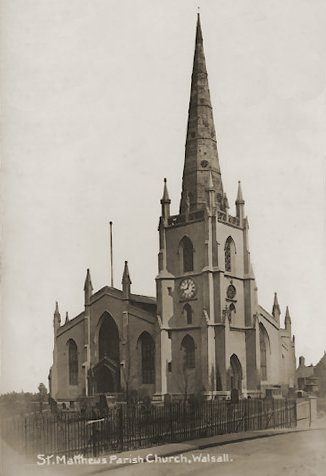
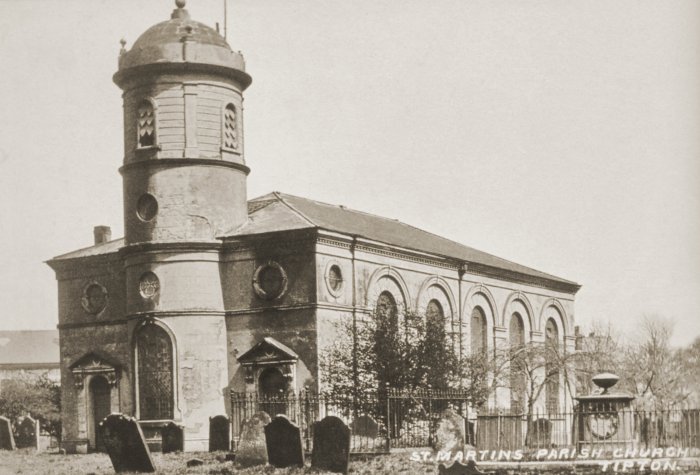
In the 1871 census, three years before Lydia married Henry Tipton, one William Cox is a Labourer but the other William Cox is recorded as being a Herbalist and he is in Oxford Street Walsall. At home with him are his wife Mary and five children, including Lydia age 16. With that specific, unusual occupation, as well as the address and the expected age for Lydia, we seem to have strong enough evidence to place Mary Boffey on the pedigree chart.
Friday, 23 November 2018
This says ... that says ...
Having an original document passed down through the generations can provide a firm foundation for the family historian. That is assuming you can find it, read it, work out what it is telling you and resolve any inconsistencies. In practice, considerable time and effort may be required to pull together multiple pieces of information from different sources.
For one set of my grandparents I have their wedding day certificate of marriage which shows the groom's father named as Charles Frederick Welch. Meanwhile, a cousin has the family's Holy Bible which I understand contains an inscription for the Family Register of Frederick Charles Welch and Fanny Welch, née Tipton. Well which was he? ... Charles Frederick or Frederick Charles?
It is clear from the registration of his birth that he was officially given the name Charles Frederick Joseph Welch. However, it seems that as a child and on into his marriage he was known as Frederick. For the records I have seen, the name Charles only reappears as his first name for the registration of his death and the certificate of his son's marriage which was a few months later. Meanwhile, the headstone placed on his grave still refers to him as Frederick.
Why register your son's name as Charles Frederick Joseph and then call him Frederick? Well it is worth noting from the birth certificate and census records that his father's name was Charles. The baby was named after his father. Perhaps the use of the name Frederick was just to avoid there being two people in the household who answered to the name of Charles!
As there was a census soon after his birth, we have evidence that the toddler was known as Frederick before he was two years old. What we may never know is whether the family started out calling him Charles and then changed over, or whether they always intended to refer to him as Frederick and passing on his father's name was only ever meant to be ceremonial.
The underlying question for a genealogist is whether you want to build up a catalogue of names and dates found in official records or aim to become more of a social historian uncovering richer details of lives as they were lived. The answer may influence which sources you go to consult, what details you seek to record and how much time you invest. However, there's always the option to avoid going around in circles, back-tracking from dead-ends, and instead read a blog which spotlights hints, tips and interesting anecdotes.
For one set of my grandparents I have their wedding day certificate of marriage which shows the groom's father named as Charles Frederick Welch. Meanwhile, a cousin has the family's Holy Bible which I understand contains an inscription for the Family Register of Frederick Charles Welch and Fanny Welch, née Tipton. Well which was he? ... Charles Frederick or Frederick Charles?
It is clear from the registration of his birth that he was officially given the name Charles Frederick Joseph Welch. However, it seems that as a child and on into his marriage he was known as Frederick. For the records I have seen, the name Charles only reappears as his first name for the registration of his death and the certificate of his son's marriage which was a few months later. Meanwhile, the headstone placed on his grave still refers to him as Frederick.
Why register your son's name as Charles Frederick Joseph and then call him Frederick? Well it is worth noting from the birth certificate and census records that his father's name was Charles. The baby was named after his father. Perhaps the use of the name Frederick was just to avoid there being two people in the household who answered to the name of Charles!
As there was a census soon after his birth, we have evidence that the toddler was known as Frederick before he was two years old. What we may never know is whether the family started out calling him Charles and then changed over, or whether they always intended to refer to him as Frederick and passing on his father's name was only ever meant to be ceremonial.
The underlying question for a genealogist is whether you want to build up a catalogue of names and dates found in official records or aim to become more of a social historian uncovering richer details of lives as they were lived. The answer may influence which sources you go to consult, what details you seek to record and how much time you invest. However, there's always the option to avoid going around in circles, back-tracking from dead-ends, and instead read a blog which spotlights hints, tips and interesting anecdotes.